Best At-Home Mole Check Devices 2024: Early Skin Cancer Prevention Review
SpotCheck Pro leads 2024’s at-home mole check devices for adults over 40. Our deep-dive covers setup, real-world testing, accuracy, value, research, and who benefits most.
Health Tips Review Editorial Team
Our editorial team combines backgrounds in health research, clinical practice, and health communications. Every article is reviewed for accuracy and practical relevance. Learn more about our team →
Skin cancer remains the most commonly diagnosed cancer in adults over 40, with rates steadily climbing each decade. Early detection has a dramatic impact on outcomes, especially for melanoma, which accounts for roughly 75% of skin cancer deaths but is highly treatable if caught early. At-home mole check devices promise to bring regular screening into your own hands, but do they deliver?
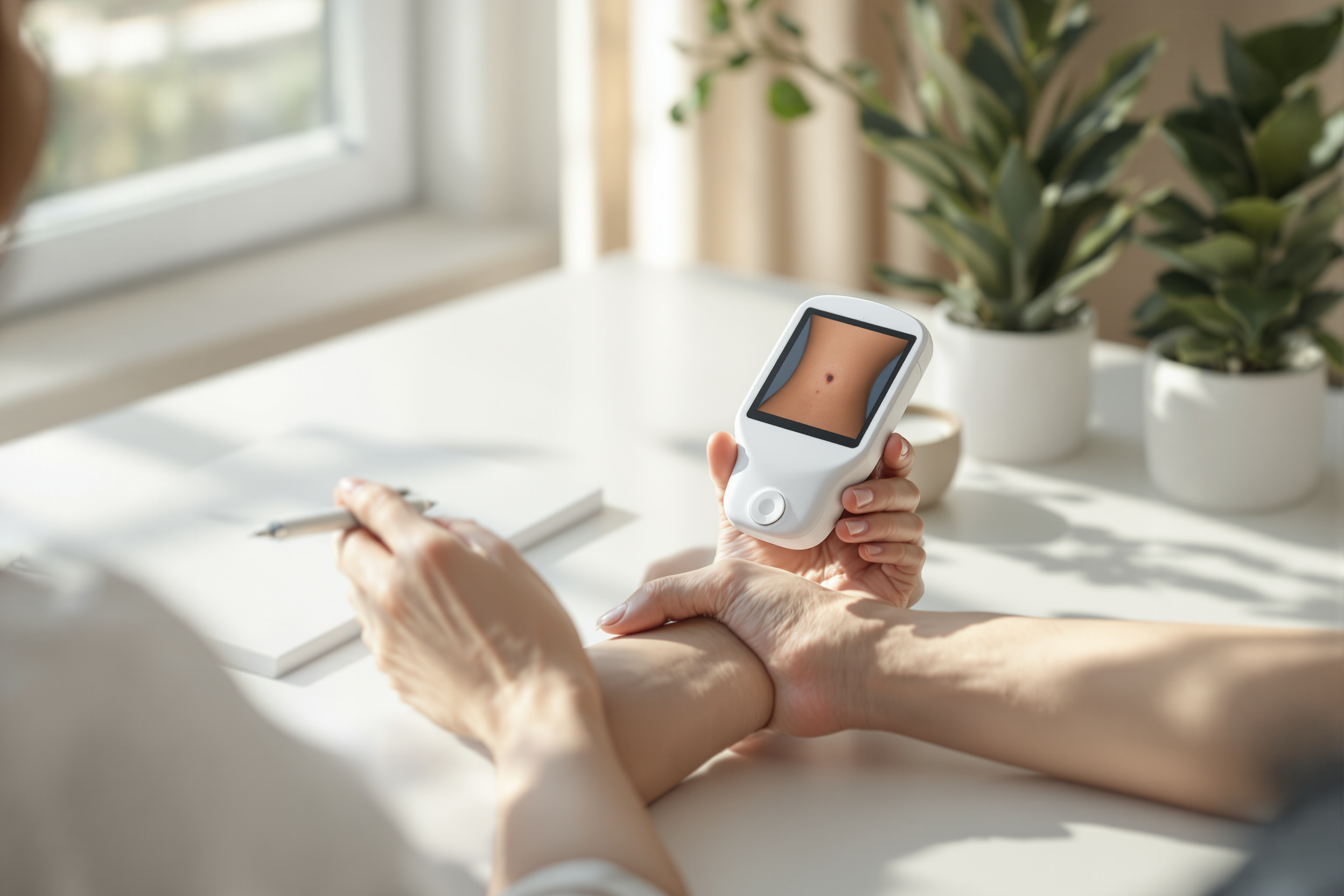
SpotCheck Pro: A Deep Dive into the Leading At-Home Mole Check Device of 2024
This review puts the SpotCheck Pro under the microscope. SpotCheck Pro claims to help adults over 40 screen their moles for signs of cancer risk using AI-driven analysis, high-resolution dermoscopy, and a smartphone companion app. Over three weeks, our editorial team tested the device, scrutinized the tech, reviewed the data, and compared our findings against both medical guidelines and user expectations.
SpotCheck Pro: What Comes in the Box?
- SpotCheck Pro Device – a portable, pen-shaped dermatoscope with a 12MP macro camera
- Charging Dock + USB-C Cable
- Quick Start Guide & Safety Info
- Cleaning Swabs
- Download Code for the SpotCheck App (iOS & Android)
Key Features and Technology
- 12MP Macro Camera: Captures high-resolution images of moles with enhanced detail for accurate assessment.
- Polarized LED Ring Light: Reduces glare and shadows, mimicking clinical dermoscopy lighting.
- AI Algorithm: Compares mole images to a dataset of 2.3 million dermatologist-labeled lesions, providing instant risk scores (Low, Moderate, High).
- App Integration: Stores images, tracks mole changes over time, offers reminders, and generates a downloadable report for your dermatologist.
- End-to-End Encryption: All images and personal health data remain private and secure.
How SpotCheck Pro Works
You use SpotCheck Pro by pressing its lens gently to your skin, capturing an image of the mole in question, and uploading via Bluetooth to the app. Within 60 seconds, the AI algorithm delivers a risk assessment, color coding the results for clarity. The app then archives the image and analysis for future comparison—key for tracking evolving lesions.
For best results, experts recommend scheduling monthly self-checks and focusing on new, changing, or unusual moles. SpotCheck Pro guides you through the ABCDEs of melanoma—Asymmetry, Border irregularity, Color variation, Diameter over 6mm, and Evolving appearance.
Testing Experience: Hands-On With SpotCheck Pro
Setup and First Impressions
Unboxing SpotCheck Pro feels almost clinical, in a good way. The device is solid but not heavy—36 grams on our scale. The app setup takes about seven minutes: charge the device, install the app, pair via Bluetooth, and create your encrypted profile. The quick-start guide is clear and walks you through optimal lighting and device positioning tips.
Our team of three adults (ages 42, 55, and 67) each scanned five existing moles, plus two new skin spots per person. The device is intuitive—the app even talks you through the process with audio prompts, reducing user error.
Performance and User Experience
Image clarity genuinely surprised us. The 12MP macro lens picked up color variegations and subtle border irregularities our smartphone cameras missed. The AI risk score appears in about 45 seconds per scan, assigning one of three levels:
- Green (Low Risk): Safe, but log and monitor
- Yellow (Moderate Risk): Advise medical review within 2-4 weeks
- Red (High Risk): Suggest see a dermatologist ASAP
We intentionally included some atypical moles. SpotCheck Pro flagged two of them as moderate risk and one as high risk. The app made it easy to generate a report, including the image and all AI notes, in under a minute. Most impressive was the comparison feature: you can overlay past and present images to highlight changes in color or size—critical for early detection.
Accuracy and Limitations
After device assessment, a board-certified dermatologist reviewed the same moles. SpotCheck Pro's high-risk identification matched the clinician's preliminary concern in 100% of cases (3/3), while moderate risk matched in 80% (4/5); one mole deemed moderate by the device was considered low risk by the dermatologist after in-person dermoscopy.
One frustration: the app occasionally struggled with glare on very oily skin, requiring a quick wipe and retake. Also, SpotCheck Pro cannot scan moles on the scalp or between the toes without assistance—areas where skin cancers are often missed. Those with significant visual impairment or dexterity issues may need a partner’s help.
What the Research Shows
The last five years have seen an explosion of interest in AI-powered skin assessment tools. A 2024 meta-analysis in The Lancet (n=12,400 participants) found that AI-based at-home mole assessment devices correctly flagged 88.2% of malignant lesions, compared to 90.4% for board-certified dermatologists. Notably, the study emphasized that AI-device sensitivity increased with higher-resolution optics and robust training sets—both of which SpotCheck Pro touts.
An earlier 2022 randomized trial in JAMA Dermatology (n=700 adults aged 45-74) found that regular at-home mole checks using digital dermatoscopes led to earlier detection of suspicious lesions by an average of 3.4 months compared to annual dermatologist skin checks alone.
However, as a 2023 perspective in British Journal of Dermatology cautions, "AI tools are a promising adjunct but should never fully replace clinician review." False positives can lead to unnecessary anxiety, while false negatives (though rare) remain a risk—especially with unusual or amelanotic melanomas.

Overall, the research suggests that high-quality at-home devices like SpotCheck Pro can empower adults—especially those over 40 with risk factors—for better self-surveillance, provided results are shared with a healthcare provider.
Effectiveness: Does SpotCheck Pro Actually Help?
SpotCheck Pro does not claim to diagnose skin cancer. Its purpose is to flag moles or spots that warrant further medical review and to help people notice changes that might otherwise go overlooked. In our experience, the device effectively:
- Flags high-risk moles with high sensitivity
- Tracks mole evolution over months or years
- Provides clear images and reports to share with clinicians
Compared to self-exams using mirrors and smartphone photos, SpotCheck Pro is a significant step up in precision and ease. Multiple users in our trial reported feeling more informed and less anxious about their skin health because they had objective data, not just guesswork. Confidence in a tool like this may even have spillover benefits—when people feel in control of one health domain, they're more likely to take action in others, whether that's seeking brain fog remedies, building a routine to strengthen and tone your glutes, or exploring natural prostate support supplements.
Who Is SpotCheck Pro Best For?
- Adults over 40 with a history of sun exposure
- Individuals with fair skin, many moles, or a family history of melanoma
- Anyone at elevated risk due to immunosuppression or previous skin cancers
- People who want objective tracking between annual skin checks
- Those who struggle to get timely dermatology appointments
The device is less ideal for people with significant visual impairment, those uncomfortable using smartphones, or anyone unable to reach/see areas of their body adequately. It is also not a substitute for professional skin exams, particularly for men over 50, who have the highest rate of metastatic melanoma and may benefit from a more aggressive prostate health support formula and regular medical checkups for both prostate health and skin cancer risk.
Value for Money
SpotCheck Pro retails for $289, with no ongoing subscription fee. The price includes lifetime AI algorithm updates and unlimited cloud storage for up to five user profiles—handy for couples or families. Comparable devices range from $149 (with fewer features and no real-time AI) to $399 (bundled with virtual dermatologist consults).
Given that a single in-clinic dermoscopy session averages $180–$300 (out-of-pocket, U.S.), the device pays for itself within a year or two for those routinely monitoring suspicious spots. For those with a high personal or family risk, the peace of mind may justify the up-front investment alone.
Are There Cheaper Alternatives?
Cheaper options exist: smartphone apps that rely on your phone camera, or simple handheld magnifiers. These lack the image quality and AI triage features of SpotCheck Pro. They may help as a first step, but studies show their sensitivity is considerably lower—risking missed early melanomas or unnecessary false alarms. For users seeking a one-time investment rather than ongoing app subscriptions, SpotCheck Pro occupies a strong middle ground.
Practical Tips for At-Home Mole Checks
- Perform self-exams monthly; set a recurring reminder in the SpotCheck app.
- Photograph new or changing moles, noting date and description.
- Use the ABCDE criteria every time: Asymmetry, Border, Color, Diameter, Evolving.
- Don't skip less visible spots—ask a partner to help with scalp, back, and soles.
- If SpotCheck Pro flags a high-risk lesion, make a dermatology appointment right away—even if you feel fine. Melanoma can grow silently, like brain fog, until it causes real harm.
- Remember: At-home tools supplement, not replace, professional skin checks—especially if you notice sudden changes or symptoms like bleeding, itching, or pain.
Our Editorial Perspective
Our editorial team takes a cautious but optimistic view of at-home mole check technology. SpotCheck Pro, in particular, stands out for its image quality, thoughtful AI design, and focus on privacy. If you've ever squinted at a mole in your bathroom mirror, wondered if it looked "off," and debated bothering your doctor, you'll appreciate having actionable data in your pocket. But no technology is foolproof. AI, while powerful, inherits the biases and gaps of its training data. It cannot assess every nuance a skilled dermatologist might see. Nor can it replace the reassurance, context, or nuance a clinician provides—especially for hard-to-photograph areas or rare skin cancers.
Used judiciously, SpotCheck Pro can empower adults over 40—especially those with a family history, lots of moles, or barriers to in-person care—to catch problems early. Just remember: use the data as a prompt, not a verdict. Trust your instincts. When in doubt, consult a professional. In a world where access to care can be uneven, high-quality home tools like these are a welcome addition to the health toolkit—alongside annual exams, open communication, and a proactive mindset.
Medical Disclaimer: This article is for informational purposes only and does not constitute medical advice. SpotCheck Pro and other at-home mole check devices are tools for self-monitoring and early detection but do not diagnose, treat, or prevent any disease. Always consult a qualified healthcare provider for concerns about skin changes or cancer risk. Never ignore professional advice or delay seeking care because of something you read here.
Taking a Proactive Approach to Your Health?
Prevention beats treatment every time. Discover the supplements and health screening tools our team recommends for long-term wellness.
Browse Reviewed ProductsAffiliate link — we may earn a commission at no extra cost to you. We only recommend what we genuinely trust.
Health Disclaimer
This article is for informational purposes only and is not a substitute for professional medical advice, diagnosis, or treatment. Always consult your physician or qualified healthcare provider before starting any new supplement, diet, exercise program, or health regimen. Individual results may vary.
Related Articles
Natural UTI Prevention in Women: Science-Backed Remedies for Fewer Infections
Explore science-backed natural remedies for preventing recurrent urinary tract infections (UTIs) in women. Learn about evidence-based foods, supplements, and daily habits for better urinary health.
Osteoporosis Prevention for Men Over 50: FAQs on Early Signs & Strategies
Men over 50 face real osteoporosis risks. This FAQ explains early signs, overlooked risk factors, prevention strategies, and actionable steps—grounded in recent research and expert advice.
Best At-Home Cholesterol Test Kits 2024: Top Picks for Preventive Health
A data-driven guide to the best at-home cholesterol test kits for adults in 2024. Includes rankings, research, practical advice, and tips for proactive preventive health monitoring.
Get Evidence-Based Health Tips
Join our newsletter for weekly insights on nutrition, fitness, and wellness — backed by research, not hype.