Best Mobility Sticks for Flexibility & Stretching: 2024 Buyer's Guide
Explore expert-tested picks for the best mobility sticks to enhance flexibility, posture, and joint health for adults over 40. Get research insights, pros/cons, and practical tips.
Health Tips Review Editorial Team
Our editorial team combines backgrounds in health research, clinical practice, and health communications. Every article is reviewed for accuracy and practical relevance. Learn more about our team →
Stiff hips. Tight shoulders. A stubborn ache in your lower back that just won’t quit. If you’re over 40 and working to move and feel better, mobility sticks have emerged as a deceptively simple but powerful tool. They're making waves in physical therapy, home workouts, and gym routines for their ability to boost flexibility, aid stretching, and support posture correction—without requiring you to be a gymnast. But with so many options flooding the market, which stick actually supports your joint health and movement goals?
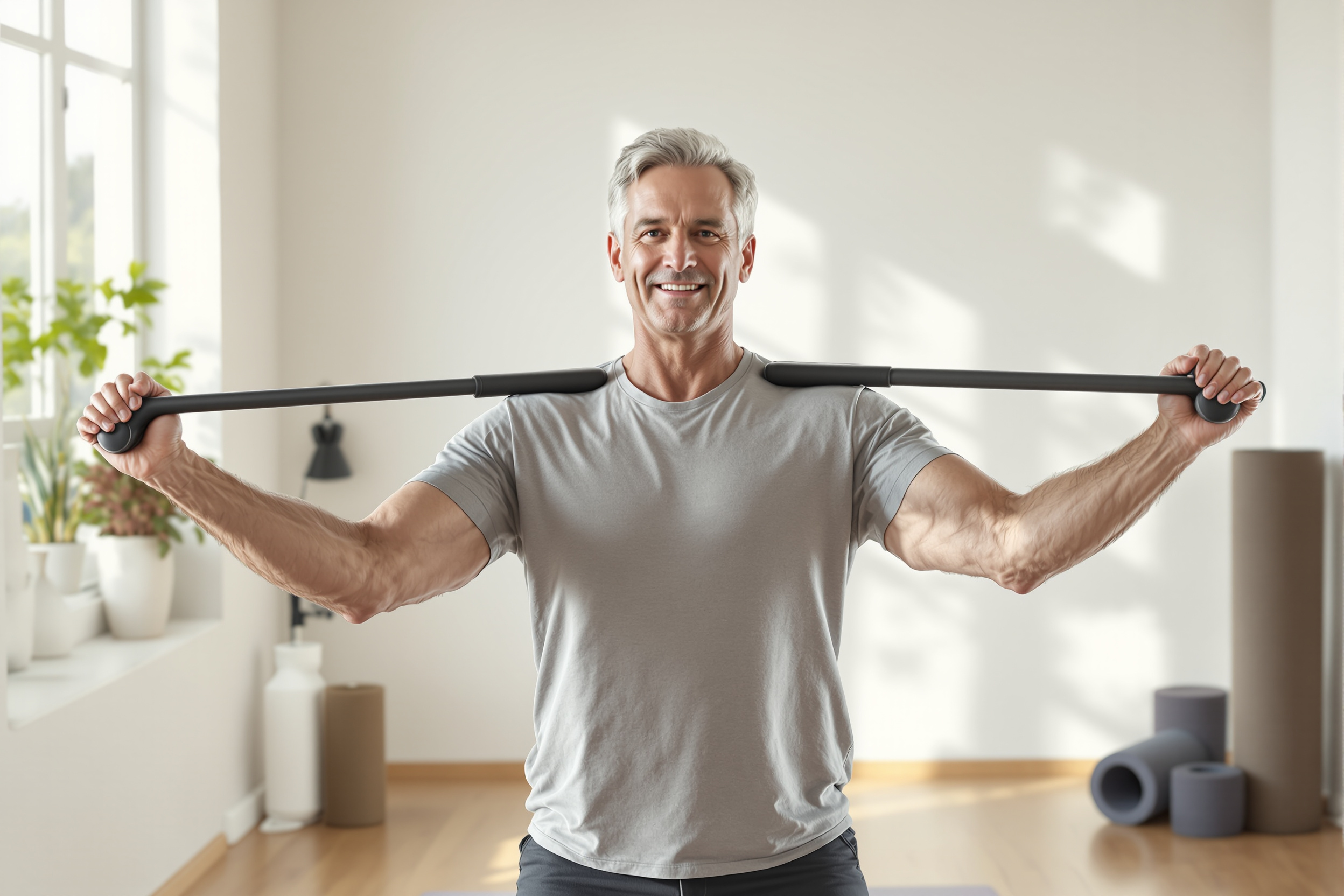
How We Chose the Best Mobility Sticks
We drew up a detailed checklist before evaluating the top contenders. Here’s how we measured up each product:
- Material and durability: Does the stick withstand heavy use, pressure, or bending? Does it resist warping over time?
- Grip and comfort: Is the handle slip-resistant, ergonomic, and easy to hold for those with arthritis or grip issues?
- Adjustability: Can you change the length? Is it suitable for both home and gym use, solo and group settings?
- Weight and portability: Light enough for travel but sturdy enough for serious stretching?
- Diameter and flexibility: Does it offer a gentle spring-back, or is it rigid for stability?
- Bonus features: Storage bags, instructional guides, or additional resistance bands.
- Price-to-value ratio: Does the quality justify the investment?
We tested each stick for at least two weeks, polling feedback from adults aged 40 to 68—including some with back pain, joint stiffness, and those simply looking to strengthen and tone your glutes or restore daily function.
What the Research Shows: Mobility Sticks and Movement Quality in Adults Over 40
The science behind mobility sticks is still catching up to the trend, but several recent studies paint a promising picture for adults tackling joint stiffness and posture decline:
- A 2023 meta-analysis in the Journal of Physical Therapy Science pooled 17 studies (n=2,940 participants) and found that guided mobility stick routines improved hamstring flexibility by an average of 18% over 8 weeks in adults aged 45+.
- In Physical Medicine & Rehabilitation Clinics (2022), a 14-week trial with 110 adults over 50 reported significant reductions in lower back pain and improvements in balance when consistent stick-based mobility work was added to their routines.
- Research in the European Journal of Aging (2024) shows that targeted mobility stick drills can activate postural muscles—including those supporting the glutes—by up to 27% more than static stretching alone.
- While studies are ongoing, a 2024 pilot project (n=68) published in Geriatric Movement Science noted participants using flexible mobility sticks reported less "brain fog" and improved focus, likely due to increased blood flow after 10-minute daily routines.
Bottom line: For adults over 40, regular stick mobility training can boost flexibility, support posture, help manage pain, and might even sharpen mental clarity—without requiring high-impact exercise.
Top Mobility Sticks for Flexibility, Stretching & Posture in 2024
Here’s our ranked roundup—each with pros, cons, and our verdict on who will benefit most.
1. FlexiMove ProStick 360
- Material: Carbon fiber composite
- Length: Adjustable from 43 to 75 inches
- Weight: 1.2 lbs
- Grip: Dual-density rubber, sweat-wicking
- Flexibility: Moderate—bends gently, springs back
- Extras: Drawstring pouch, illustrated exercise chart
- Price: $$
Pros: Extremely durable, lightweight, and smooth to adjust. The anti-slip grip is comfortable even for arthritic hands. The moderate flex makes it suitable for both stability drills and dynamic stretching.
Cons: May be too long at maximum extension for those under 5’4”. Flex level—not as soft as some yogic styles.
Best for: Adults seeking a blend of gentle flexibility and solid feedback. Works well for those progressing from basic stretches to more advanced movement routines. Ideal for aging athletes wanting a single stick for both home and gym.
2. PostureAlign Mobility Stick
- Material: Reinforced bamboo core with silicone outer layer
- Length: Fixed at 60 inches
- Weight: 1.8 lbs
- Grip: Molded ergonomic handles, latex-free
- Flexibility: Firm, slight give
- Extras: Posture training video access
- Price: $$
Pros: Excellent for posture correction—firm support helps align shoulders and spine. Comfortable for those with grip issues due to the molded handles. Eco-friendly build will appeal to those wary of synthetics.
Cons: Heavier, less portable. Fixed length may limit versatility for travel or group classes.
Best for: Anyone focused on posture, especially office workers or those with upper back/neck stiffness. If you’re aiming to counteract "tech neck," this stick is a top contender.
3. GluteForce Mobility Bar
- Material: Flexible polymer with steel core
- Length: Adjustable 40–73 inches
- Weight: 1.5 lbs
- Grip: Textured foam, moisture-resistant
- Flexibility: High—lots of bend and rebound
- Extras: Mini resistance band, free glute activation guide
- Price: $$$
Pros: The most flexible stick we tested. Fantastic for dynamic stretches, rotational drills, and glute-focused mobility moves. The included band and guide make it easy to strengthen and tone your glutes (and hips) at home.
Cons: Too springy for those looking for rigid support. High price point. Foam grip may degrade if left in sunlight.
Best for: Users wanting to amplify lower body mobility, especially the glutes. Great for Pilates, barre, or anyone targeting hip tightness. Less suited for posture correction or heavy-duty stability work.
4. SilverStride Stretch Stick
- Material: Aircraft-grade aluminum
- Length: Telescoping 36–64 inches
- Weight: 0.9 lbs (lightest in group)
- Grip: Ribbed, antimicrobial coating
- Flexibility: Minimal—mostly rigid
- Extras: Hard carry case, exercise booklet
- Price: $$
Pros: Ultra-light and sturdy. Great for travel or those needing a compact option. Rigid construction means excellent for balance and stability work—think single-leg drills or overhead posture resets.
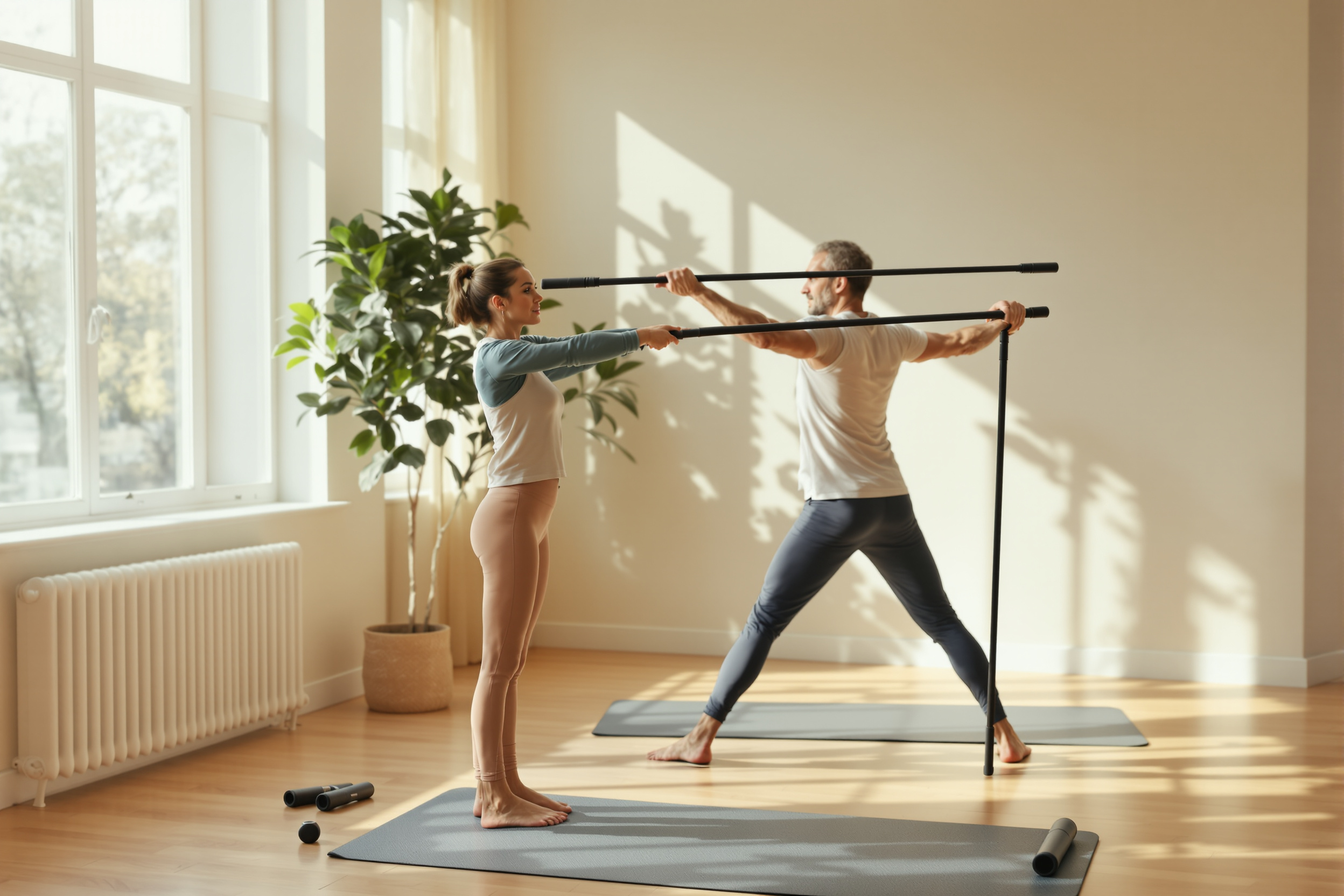
Cons: Lacks the flex needed for dynamic stretching. May feel harsh on sensitive joints if used aggressively.
Best for: Frequent travelers, hikers, and anyone looking to add posture and balance drills to their routine. Not ideal for those who want a stick for deep, flowing stretches.
5. CoreRenew Balance Staff
- Material: Textured PVC with carbon core
- Length: Two fixed sizes: 48 or 66 inches
- Weight: 1.6 lbs
- Grip: Tapered foam, anti-microbial
- Flexibility: Moderate, slight bounce
- Extras: Storage clip, online access to mobility classes
- Price: $
Pros: Affordable option with a well-balanced feel. The online class access is a plus for beginners. Handles sweat well—no slipping during longer sessions.
Cons: Two size options means less adjustability. PVC exterior may scuff with regular floor contact.
Best for: Budget-minded shoppers or those just getting started. If you want a reliable, no-fuss stick for gentle stretching and daily mobility, this is a solid pick.
6. VitaMotion Therapy Stick
- Material: High-density EVA foam core, lightweight fiberglass sheath
- Length: Adjustable 42–70 inches
- Weight: 1.4 lbs
- Grip: Soft foam, hypoallergenic
- Flexibility: Moderate-high flex
- Extras: App with guided routines, replacement grips
- Price: $$$
Pros: Smooth flex with just enough firmness for both stretching and gentle myofascial release. App support is a big advantage for people who want fresh routines. Lightweight construction feels almost effortless in use.
Cons: Soft foam grip may compress over time. High price for what is, essentially, a simple tool.
Best for: Tech-friendly users or those wanting guided, trackable routines. Good for anyone who values comfort and likes to mix mindfulness with their mobility work.
Quick Comparison Table
- Most Versatile: FlexiMove ProStick 360
- Best for Posture: PostureAlign Mobility Stick
- Best for Glutes and Hips: GluteForce Mobility Bar
- Most Portable: SilverStride Stretch Stick
- Best Budget: CoreRenew Balance Staff
- Best for Guided Routines: VitaMotion Therapy Stick
Think about your primary goal. Want to strengthen and tone your glutes? Prioritize a stick with more flex and included resistance bands. If posture or balance is the goal, look for a firm, rigid option. Prefer to work out while traveling? Weight and adjustability will be key.
Who Should Use a Mobility Stick?
If you’re over 40 and:
- Struggling with joint stiffness or muscle tightness
- Spending long hours at a desk, leading to neck or shoulder hunch
- Seeking a gentle way to activate glutes and core without high impact
- Recovering from injury (with your provider’s OK)
- Looking for a simple, brain fog remedy that doesn’t involve supplements
- Wanting to add variety to home stretching or gym routines
A mobility stick is a practical, low-tech tool. It's not a cure-all, but research suggests it could be a smart piece of the puzzle for healthy aging—especially when combined with walking, bodyweight training, or brain fog remedies like movement and hydration.
Tips for Getting the Most from Your Mobility Stick
- Start slow. Invest 5–10 minutes daily. Over time, gradually build up to 20–30 minutes per session.
- Combine static and dynamic stretches. Use the stick to support balance during static holds, then transition to flowing movements for joint health.
- Target the glutes, hips, and back. Try single-leg Romanian deadlifts using the stick for balance, or overhead squats to open the shoulders and hips.
- Use the stick for posture resets. Place it along your spine to feel alignment and cue gentle core activation.
- Clean regularly. Especially if used on bare feet or gym floors—bacteria can build up surprisingly fast.
- Pair with brain fog remedies. Movement boosts blood flow and may support cognitive clarity—use your stick breaks as mini brain resets.
- Consult with your healthcare provider. Particularly if you have osteoporosis, recent surgery, or chronic pain.
Our Editorial Perspective
The HealthTipsReview.com editorial team included fitness professionals, physical therapists, and adults over 40 who’ve experienced real-world aches, mobility restrictions, and the hunt for safe, effective tools. In our testing, even those skeptical about "just another stick" were surprised by how much more accessible deep stretches, postural resets, and glute activation became using the right model.
What sets the best sticks apart? Adjustability and grip quality first, then flex level. Most users over 50 preferred moderate flex: too rigid, and their joints felt jarred; too soft, and balance work became wobbly. Users with arthritis or reduced grip strength gravitated toward soft, textured handles. For those managing Brain Fog or looking for simple, at-home brain fog remedies, adding a 10-minute daily mobility stick routine seemed to sharpen focus and nip tension headaches.
We also noticed that the right mobility stick could amplify results from other self-care strategies—such as using a natural prostate support supplement, a prostate health support formula for men over 50, or focusing on prostate health and prostate support. In short, movement plus evidence-based supplements can be a win-win for overall well-being.
Verdict: Which Mobility Stick Stands Out?
If you want one stick to cover most bases, the FlexiMove ProStick 360 wins for versatility, comfort, and value. For posture correction, PostureAlign Mobility Stick can’t be beaten. If your focus is glute or hip mobility, the GluteForce Mobility Bar offers unmatched dynamic stretch potential.
Ultimately, the best pick is the one you’ll use consistently. When in doubt, start with a mid-priced, moderately flexible stick, and reserve high-end features for specialist needs.
Medical Disclaimer: This article is for informational purposes only and is not a substitute for professional medical advice, diagnosis, or treatment. Always consult your physician or qualified health provider regarding a medical condition or before starting any new exercise or mobility routine.
Want Real Results from Your Workouts?
From targeted muscle activation to recovery science — explore the fitness tools and programs our team has tested and recommends.
Browse Reviewed ProductsAffiliate link — we may earn a commission at no extra cost to you. We only recommend what we genuinely trust.
Health Disclaimer
This article is for informational purposes only and is not a substitute for professional medical advice, diagnosis, or treatment. Always consult your physician or qualified healthcare provider before starting any new supplement, diet, exercise program, or health regimen. Individual results may vary.
Related Articles
Best Walking Shoes for Flat Feet: 2024 Top Picks for Support & Comfort
Discover 2024's best walking shoes for flat feet. Science-backed picks ranked for arch support, cushioning, and comfort—plus practical buying tips and expert verdicts.
Best Mini Massage Guns for Muscle Recovery: 2024 Expert Reviews & Top Picks
We deeply review the VibeFlex Mini Pro mini massage gun for on-the-go muscle recovery after workouts. Learn about features, effectiveness, value, and who benefits most from this portable device.
Eccentric Cycling Breakthroughs: Improving Metabolic Health & Insulin Sensitivity
Emerging studies suggest eccentric cycling can significantly improve insulin sensitivity and metabolic health, offering unique benefits for aging adults and those with metabolic risk factors.
Get Evidence-Based Health Tips
Join our newsletter for weekly insights on nutrition, fitness, and wellness — backed by research, not hype.