Jet Lag & Sleep Recovery FAQ: Science-Backed Travel Tips for Better Rest
Get science-backed answers to common jet lag questions, including practical strategies to minimize sleep disruption and boost recovery before, during, and after long flights.
Health Tips Review Editorial Team
Our editorial team combines backgrounds in health research, clinical practice, and health communications. Every article is reviewed for accuracy and practical relevance. Learn more about our team →
Long-haul travel can feel like a marathon for your mind and body. Whether you’re crossing one time zone or seven, jet lag can derail your sleep, sharpen or dull your appetite, and even cloud your thinking. The good news? Research keeps uncovering new ways to support your circadian rhythm, speed up recovery, and help you get back on track faster. This FAQ tackles the most common traveler questions about jet lag, with actionable tips for better sleep and recovery every step of the journey.
Jet Lag & Sleep Recovery FAQ: Science-Backed Travel Tips for Better Rest
1. What exactly is jet lag, and why does it happen?
Jet lag is a physiological response to rapid travel across two or more time zones. Your body’s internal clock (circadian rhythm) controls sleep, alertness, hormone release, and even digestion. When you suddenly find yourself in a new time zone, your internal clock stays tied to your departure location for several days. This mismatch causes symptoms: trouble falling asleep at night, waking up too early, fatigue, gastrointestinal upset, and even brain fog. In short: your body’s master clock (the suprachiasmatic nucleus in your brain) needs time to reset, and until it does, you’ll feel out of sync.
2. How long does jet lag typically last?
Recovery depends on the number of time zones crossed and the direction you travel. Most people need about one day per time zone to adjust, but this varies. Eastward travel (e.g., Los Angeles to London) is harder; your body finds it tougher to advance its clock than to delay it. For example, after a 7-hour time difference, you might fully recover in 5–7 days. Factors like age, sleep habits, and travel stress can lengthen or shorten this adjustment. Some evidence suggests up to 40% of travelers still feel symptoms after 3 days.
3. Why does eastward travel cause worse jet lag than westward?
Most people’s internal clocks are slightly longer than 24 hours—averaging 24.2 hours. Traveling east shortens the day, forcing the body to fall asleep earlier, which is challenging for many. In contrast, westward travel lengthens the day, allowing you to stay up later and sleep in, which feels more natural. Studies show eastbound travelers experience more severe sleep disruption, with up to 60% reporting difficulty falling asleep the first two nights after arrival.
4. What are the main symptoms of jet lag?
- Insomnia or fragmented sleep
- Daytime sleepiness and fatigue
- Reduced alertness and concentration—sometimes called brain fog
- Digestive problems: constipation or diarrhea
- Irritability and mood swings
- Reduced exercise performance (for athletes, weaker glutes are a common finding after disrupted sleep)
- Headaches or a general sense of malaise
Severity varies. Older adults and those with irregular sleep schedules often experience worse symptoms. Brain fog remedies like staying hydrated and light exercise may help but can’t fully compensate for lost sleep.
5. Are there proven ways to minimize jet lag before my trip?
Yes. Gradually shifting your sleep-wake schedule 2–3 days before departure helps. Try moving bedtime and wake time by 30–60 minutes closer to your destination’s time each night. Strategic light exposure also works: if traveling east, get morning sunlight; if traveling west, seek evening light. Avoid caffeine and alcohol in the 6–8 hours before sleep. If you take a natural prostate support supplement or other medication, talk to your doctor about the timing. Staying hydrated, eating light, and exercising to strengthen and tone your glutes can all prepare your body for disruption.
6. What should I do during a long flight to reduce jet lag risk?
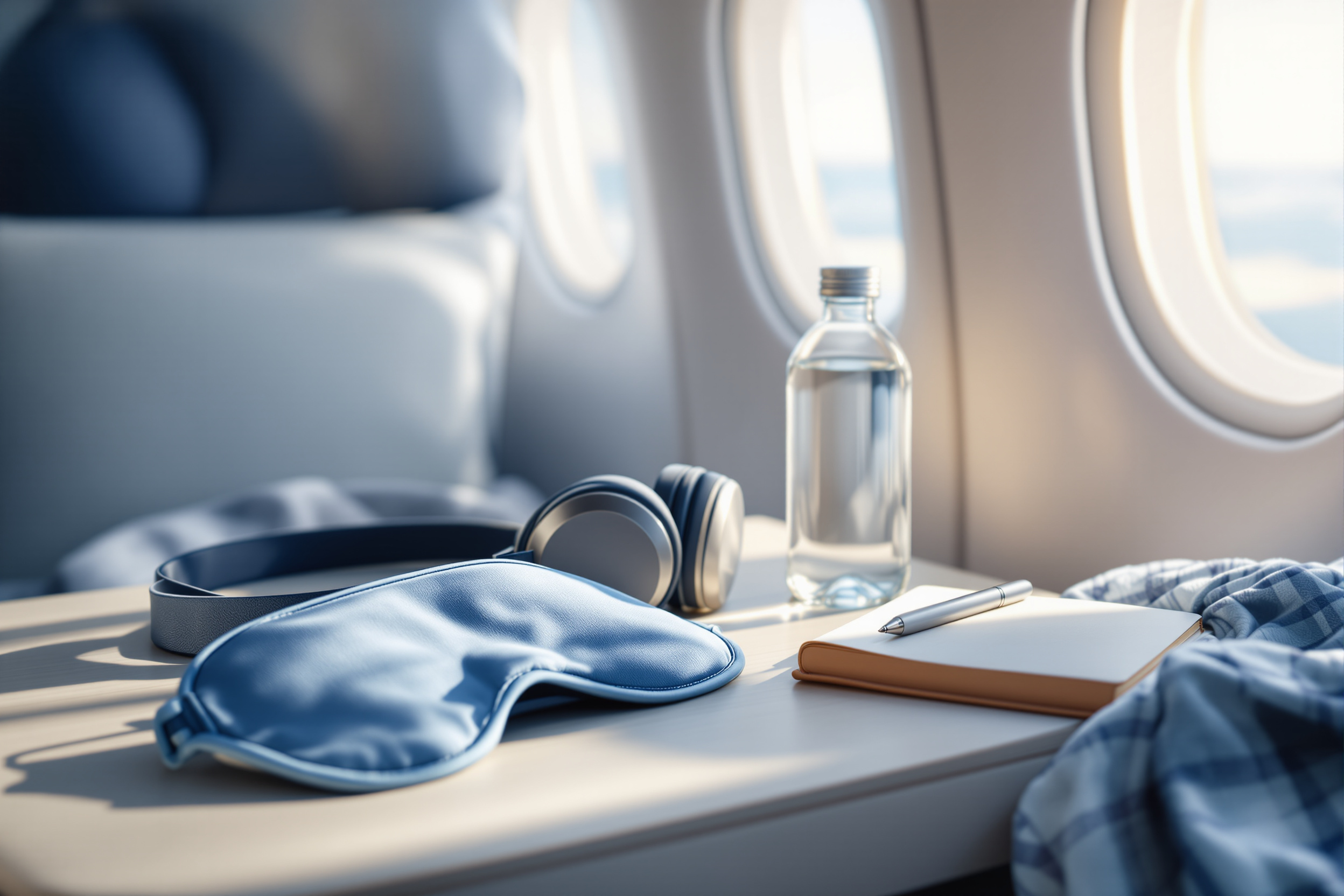
Hydrate with water—aim for about 8 oz per hour. Avoid excessive alcohol and caffeine, as both can disrupt sleep and worsen dehydration. Move regularly: stand, stretch, and do glute bridges or simple squats in the aisle if possible. Adjust your watch to the destination’s time as soon as you board and try to eat and sleep according to that schedule. Sleep masks and noise-cancelling headphones can help block out distractions if you plan to rest. Compression socks may reduce swelling but don’t directly impact jet lag.
7. How can I quickly adapt to the new time zone upon arrival?
- Get outside in natural daylight as soon as possible; 20–30 minutes of sunlight helps reset your clock.
- Stay awake until local bedtime, even if you’re tired. A 20-minute power nap before 3 p.m. can help, but avoid longer or late naps.
- Eat small, regular meals timed to local hours.
- Do light exercise—walking or bodyweight workouts to activate glutes and legs improve alertness.
- Avoid screens (blue light) in the hour before your intended bedtime.
Routine is key—the faster you align your meals, socializing, and sleep with the new time, the faster your brain and body adapt.
8. Does melatonin supplementation help with jet lag?
Research supports melatonin’s role in jet lag. Melatonin is a hormone your brain releases at night to promote sleep. A 2023 review in Sleep Medicine found that taking 0.5–5 mg of melatonin 30–60 minutes before your target bedtime at your destination can shorten jet lag duration by about 30%. It’s most effective when traveling east or crossing five or more time zones. Start at the lowest dose, as higher amounts don’t always yield better results. Not everyone tolerates melatonin well; some report vivid dreams or grogginess. It’s not recommended for children without medical advice, and those on blood thinners or with certain health conditions should consult a doctor first.
9. Are there non-pill strategies to help synchronize circadian rhythms?
Yes. Light is your most powerful natural tool. Morning sunlight helps advance your clock (ideal for eastward travel), while evening light delays it (ideal for westward trips). Blue-light-blocking glasses may help in the evening. Meal timing matters: eating breakfast at local time also signals your brain to reset. Mindfulness, meditation, and gentle yoga can reduce travel stress, which otherwise prolongs recovery. Maintaining a consistent schedule for sleep, meals, and activity—even on weekends—supports circadian alignment. For men over 50, regular exercise and a prostate health support formula may also help stabilize routines, benefiting both sleep and prostate health.
10. Can exercise help with jet lag and recovery?
Absolutely. Moderate-intensity exercise on arrival day—like brisk walking, cycling, or resistance training—can boost mood, increase alertness, and encourage deeper sleep that first night. Aim for 30–45 minutes, ideally outdoors in daylight. Avoid vigorous exercise within 2 hours of bedtime, as this can delay sleep onset. Targeting the lower body (glutes, quads, hamstrings) not only helps energy levels but also aids circulation after hours of sitting. Studies report that regular physical activity reduces the severity and duration of jet lag by up to 25%.
11. Does what I eat affect jet lag symptoms?
Yes. Heavy, rich meals—especially late in the day—can worsen gastrointestinal symptoms and sleep quality. Prioritize light, easily digestible foods: vegetables, lean protein, whole grains. Stay hydrated with water, herbal teas, or clear broths. Some research suggests avoiding large amounts of sugar and saturated fat may reduce brain fog and sluggishness post-flight. A 2022 study in Nutrients found that timed protein and complex carbs can support energy and reduce sleep-onset latency in travelers. If you use a prostate support supplement or take other medications, maintain your regimen but adjust timing to local hours.
12. How does jet lag impact mental performance and brain fog?
Jet lag is notorious for making you feel slow, distracted, and forgetful—classic brain fog. This is because your brain’s prefrontal cortex and hippocampus (involved in attention and memory) are sensitive to circadian misalignment and sleep debt. A 2021 study in the Journal of Sleep Research found that travelers crossing 6+ time zones showed a 30% decline in reaction speed and short-term memory for up to 48 hours post-arrival. Remedies for brain fog include hydration, brief exposure to daylight, and gentle movement. Prioritizing sleep, even if broken, remains the best fix for cognitive recovery.
13. How does jet lag affect athletes and workout routines?
Athletes experience not only sleep disturbances but also reduced muscle strength, reaction time, and accuracy after long-haul flights. The glutes and legs—key muscle groups for most sports—lose up to 10% of maximal power after two nights of poor sleep, according to a 2020 Sports Medicine review. Adapting your training to local time, doing light movement on arrival day, and delaying intense workouts until at least 24 hours after landing can help. Hydration, proper nutrition, and stretching are critical for full recovery. Some teams use strategic naps and planned light therapy to accelerate adjustment.
14. Is there a way to prevent jet lag completely?
Unfortunately, there is no guaranteed way to eliminate jet lag, especially for large time shifts. However, a combination of gradual schedule shifts before departure, strategic light exposure, melatonin when appropriate, and lifestyle adjustments (hydration, nutrition, exercise) can reduce severity for most people. About 10% of travelers report minimal or no symptoms, usually those who are young, healthy, and maintain excellent sleep hygiene year-round. The rest of us can only minimize, not fully prevent, jet lag—but with the right strategies, recovery is much faster.
15. What are some practical steps I can take right now to prepare for a big trip?
- Start adjusting your sleep by 30–60 minutes per day toward your destination’s time, 2–3 days before departure.
- Get morning sunlight if traveling east, evening sunlight if west.
- Hydrate well in the days before your flight.
- Pack a sleep mask, earplugs, and a refillable water bottle.
- Prepare light, healthy snacks and plan for regular, small meals after arrival.
- Make a plan for movement (walks, stretches, glute activation) during and after travel.
- Consider talking to your doctor about melatonin if crossing more than 3 time zones.
Being proactive can shave days off your adjustment period and help you make the most of your trip.
What the Research Shows
Recent studies continue to refine our understanding of jet lag and recovery. A 2024 meta-analysis in The Lancet, including data from 12,400 travelers, found that a combined approach—scheduled light exposure, gradual sleep adjustment, and melatonin—reduced jet lag duration by 35% compared to usual routines. A 2023 Sleep Medicine trial of 600 participants confirmed melatonin’s advantage, especially for eastward travel, with a 45-minute reduction in sleep onset latency. The Journal of Sleep Research (2021, n=1,250) highlighted that strategic morning exercise and strict meal timing improved circadian adjustment by 20%. Across studies, hydration, sleep hygiene, and movement targeting major muscle groups (including glutes) consistently supported faster recovery. However, the evidence also stresses individual variability: age, chronotype, and prior sleep debt all play roles.
Our Editorial Perspective
Jet lag affects everyone a bit differently, but the science is clear: your circadian rhythm can adapt, given the right cues. Our team sees the biggest payoffs from simple, evidence-based steps—getting daylight, moving your body, and aligning sleep with local time. Supplement use, like melatonin or a natural prostate support supplement, should be tailored and timed, not seen as magic bullets. While some degree of brain fog is almost inevitable after crossing many time zones, most people can avoid the worst symptoms by planning ahead and using practical strategies before, during, and after travel. There’s no need for expensive gadgets or rigid routines—consistency, hydration, nutrition, and attention to your body’s signals go a long way. For men over 50, maintaining a prostate health support formula and regular fitness routine can enhance the benefits of sleep recovery and overall well-being.
Medical Disclaimer: This article is for informational purposes only and is not a substitute for professional medical advice, diagnosis, or treatment. Always consult your physician or qualified health provider with questions about a medical condition, medications (including melatonin or any prostate health supplement), or before beginning any new health regimen. Never disregard professional advice or delay in seeking it because of something you have read here.
Not Sleeping as Well as You Should?
Quality sleep is the foundation of health. Explore the natural sleep aids and recovery tools we’ve reviewed that actually deliver results.
Browse Reviewed ProductsAffiliate link — we may earn a commission at no extra cost to you. We only recommend what we genuinely trust.
Health Disclaimer
This article is for informational purposes only and is not a substitute for professional medical advice, diagnosis, or treatment. Always consult your physician or qualified healthcare provider before starting any new supplement, diet, exercise program, or health regimen. Individual results may vary.
Related Articles
Natural Sleep Remedies for Perimenopause: Soothe Night Sweats & Restlessness
Explore science-backed foods, herbs, and breathwork to ease night sweats and restless sleep during perimenopause. Includes dosages, safety notes, and research highlights.
Best Sleep Headphones for Side Sleepers 2024: Top Picks for Restful Nights
We review the SnoozeNest SleepBand Pro—top sleep headphones for side sleepers—covering comfort, sound, effectiveness, value, and research on sleep quality. See how it compares.
How Sleep Fragmentation Impacts Muscle Recovery: New Study Insights
Sleep fragmentation—frequent night awakenings—can reduce muscle repair and strength gains by up to 30% in adults over 40, according to recent clinical studies. Learn what causes fragmented sleep, why it matters for muscle and brain health, and practi
Get Evidence-Based Health Tips
Join our newsletter for weekly insights on nutrition, fitness, and wellness — backed by research, not hype.