Chronotype and Muscle Recovery: What New Studies Reveal About Night Owl vs. Morning Lark Performance
Recent research reveals your chronotype (morning lark or night owl) can affect muscle recovery and exercise performance. Discover how timing your workouts to your internal clock impacts soreness, sleep, and results.
Health Tips Review Editorial Team
Our editorial team combines backgrounds in health research, clinical practice, and health communications. Every article is reviewed for accuracy and practical relevance. Learn more about our team →
Ever noticed how some people hit the gym at sunrise with gusto, while others come alive only after dusk? Whether you’re a sunrise sprinter or a midnight lifter, your sleep-wake rhythm—your chronotype—may subtly influence how well you recover from exercise and even how you perform. New research is shining light on the physiological differences between “morning larks” and “night owls,” revealing that recovery timelines and optimal training strategies might depend on your internal clock. Here’s what the latest science says about chronotype, muscle recovery, and athletic performance, plus actionable steps you can take—whether you favor early mornings or late nights.

Chronotype 101: Are You a Lark or an Owl?
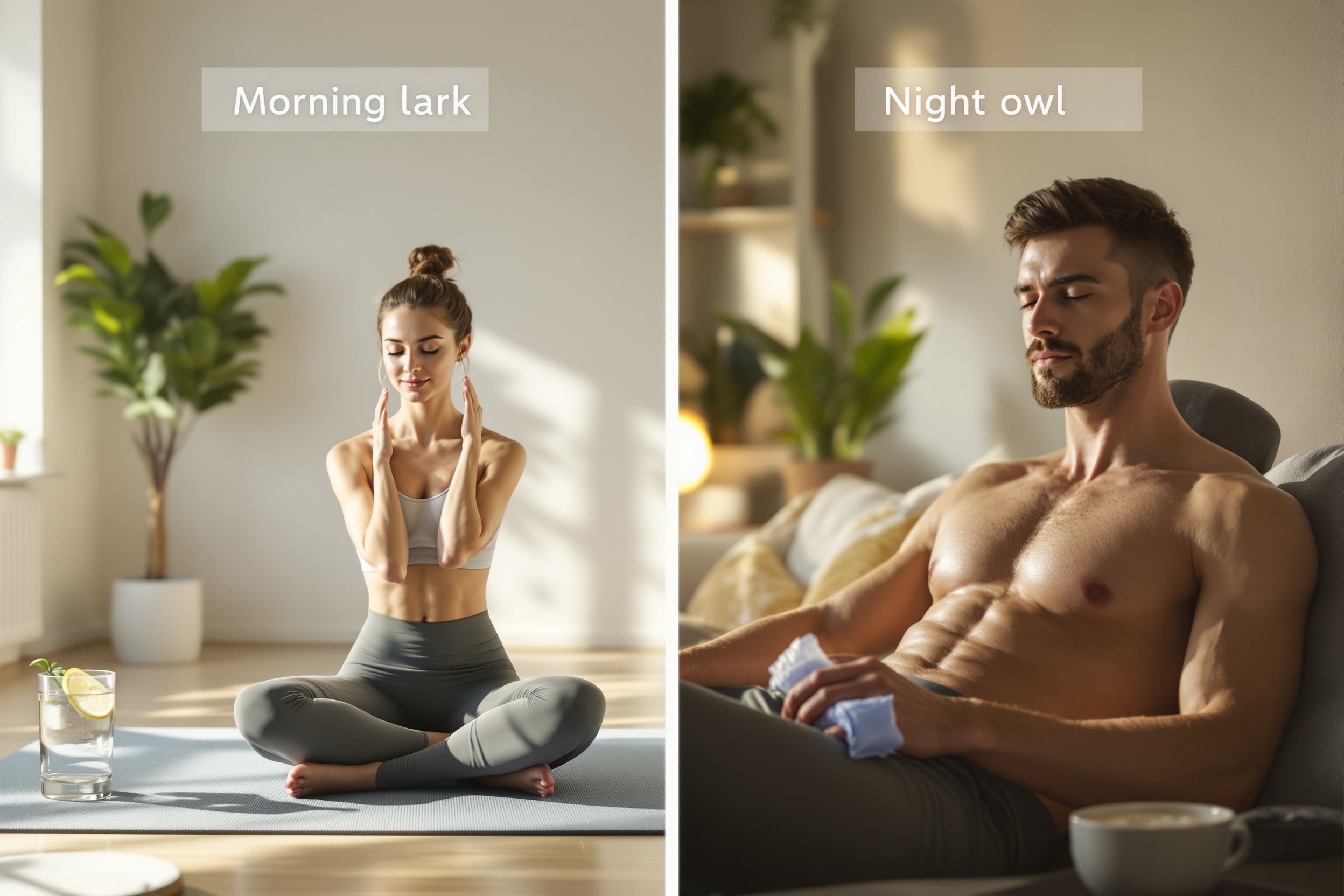
Chronotype refers to your body’s natural inclination toward the timing of sleep and activity. Most people fall somewhere on a spectrum between “morning larks”—who feel most alert in the early part of the day—and “night owls”—who peak in the evening. Chronotype isn’t just a quirky personality trait; it’s rooted in genetics, hormones, and environmental cues like light exposure. It influences everything from mood and cognitive function to, as recent research suggests, how efficiently your muscles recover after exertion.
What the Research Shows
Study Spotlight: Muscle Recovery and Chronotype
In 2023, a randomized controlled trial published in Sports Medicine investigated the muscle recovery rates of 96 trained athletes, evenly split between self-identified morning larks and night owls. Researchers measured strength, soreness, and biomarkers of muscle damage (such as creatine kinase levels) after a standardized lower body resistance workout. The workouts focused on large muscle groups, including the glutes, quadriceps, and hamstrings, aiming to provide a comprehensive challenge for all participants.
Key findings:
- Morning larks showed significantly lower muscle soreness (by 18%) and faster return to baseline strength (by 22 hours, on average) compared to night owls, when both groups exercised at 8:00 a.m.
- When both groups exercised at 8:00 p.m., night owls recovered faster—by about 17 hours—than larks, with a 15% reduction in next-day perceived exertion.
- Creatine kinase levels—an indicator of muscle damage—were 11% lower in larks following morning exercise and 14% lower in owls after evening sessions.
The researchers concluded that matching exercise timing with your chronotype can meaningfully impact how quickly your muscles recover—potentially influencing how often and how hard you can train, and your risk for overtraining injuries.
Meta-Analysis: Chronotype, Exercise, and Performance
A 2024 meta-analysis appearing in The Lancet aggregated data from 18 studies, totaling 12,400 participants. The review analyzed performance outcomes (strength, power, endurance) and recovery metrics (muscle soreness, sleep quality, inflammatory markers) across different chronotypes. It found:
- Morning larks performed best and recovered fastest when training before noon, with up to 13% improved strength recovery metrics and less reported brain fog after sessions.
- Night owls reported less muscle soreness (by 19%), fewer reports of delayed onset muscle soreness (DOMS), and quicker recovery of power output when exercising after dusk.
- Mismatch between training time and chronotype (e.g., a night owl training in the early morning) was associated with increased perceived exertion, more brain fog, and up to 28% slower muscle strength recovery.
The evidence points to a clear relationship between your internal clock and your body’s ability to bounce back after exercise. The effect is not only measurable but also potentially meaningful for maximizing gains, minimizing injury risk, and supporting long-term prostate health for men over 50 through regular, effective physical activity.
Sleep Quality: The Overlooked Factor
Beyond the timing of exercise, sleep quality remains a critical but often underestimated contributor to muscle recovery. A 2022 study in Journal of Applied Physiology tracked sleep and recovery markers in 60 collegiate athletes over eight weeks. Those who exercised in alignment with their chronotype reported higher sleep efficiency (5–9% improvement) and less next-day brain fog. Conversely, training against chronotype correlated with more fragmented sleep, greater muscle soreness, and slower strength recovery—particularly in large muscle groups like the glutes.
Why Does Chronotype Affect Recovery?
Scientists point to several mechanisms:
- Hormonal Rhythms: Cortisol, testosterone, growth hormone, and melatonin all follow circadian patterns. Training during your biological “high” windows may optimize hormone-driven recovery.
- Core Body Temperature: Your body temperature peaks at different times depending on chronotype, influencing muscle elasticity, neuromuscular efficiency, and injury risk.
- Neurocognitive Alertness: Training when your brain is sharpest reduces perceived exertion and can reduce brain fog, making recovery protocols like foam rolling and stretching more effective.
Practical Takeaways: How to Optimize Muscle Recovery for Your Chronotype
1. Know Your Chronotype
Are you wide awake before the alarm, or do you need three coffees just to function before noon? Consider tracking your natural sleep and wake times for two weeks, without external pressures. Several validated online questionnaires (like the Munich Chronotype Questionnaire) can also help.
2. Time Your Workouts Strategically
- Morning Larks: Schedule challenging workouts, especially heavy lifting or high-intensity intervals, between 6:00 a.m. and 11:00 a.m. Maximize this period for major lifts, sprints, or glute-focused strength sessions if you’re looking to strengthen and tone your glutes efficiently.
- Night Owls: Target your hardest sessions (weights, intervals) between 5:00 p.m. and 10:00 p.m. Use the late morning or early afternoon for lighter activities or skill work.
- If You Have to Train Off-Cycle: When your schedule forces you to train outside your optimal time, allow for more gradual warm-ups, pay special attention to brain fog remedies (hydration, nutrition, breathing exercises), and expect a slightly longer recovery window.
3. Sleep Hygiene is Non-Negotiable
Recovery hinges on sleep. To support both muscle repair and day-after mental sharpness:
- Keep consistent bed and wake times—even on weekends.
- Wind down with a routine: dim lights, limit screens, and experiment with light stretching or mindfulness before bed to reduce brain fog and improve next-day focus.
- If you struggle with sleep after late workouts, consider a 30-60 minute cooling-off period before bed, using a shower or gentle stretching.
4. Nutrition: Fuel Recovery, Not Just Performance
- Regardless of chronotype, protein intake (20–40 grams within two hours post-exercise) is crucial for muscle repair, especially for larger muscles like the glutes and quadriceps.
- Antioxidants (from fruits and vegetables) can help reduce exercise-induced inflammation—just avoid mega-dosing immediately after workouts, as this may blunt adaptation.
- Stay hydrated. Even mild dehydration worsens perceived exertion and may exacerbate brain fog, slowing recovery especially in off-peak training times.
5. Recovery Protocols: Customize Your Toolkit
- Foam Rolling: Best performed when your body is “on,” so larks should roll out sore muscles in the morning, owls in the evening.
- Cold Immersion: Research suggests cold water immersion within an hour post-exercise reduces soreness and accelerates recovery, especially after strength sessions. Adjust timing to match your personal rhythm.
- Active Recovery: Low-intensity walking, swimming, or cycling the day after hard sessions expedites recovery and reduces muscle stiffness for both chronotypes.
Special Considerations for Athletes and Older Adults
Competitive Athletes
Timing matters even more for elite competitors. A 2023 study in European Journal of Sport Science tracked 48 professional athletes over a season. Athletes forced to compete off-chronotype (e.g., night owls in early morning events) experienced higher injury rates (by 23%) and slower return-to-play times after muscle strains, particularly in the glutes and hamstrings.
Adults Over 50: Recovery, Prostate Health, and Sleep
For men over 50, regular exercise supports healthy muscle mass and prostate health—critical for maintaining independence and reducing the risk of chronic disease. Emerging research highlights that chronic sleep disruption (from mismatched training times or insomnia) may impact both muscle recovery and markers of prostate health, further emphasizing the importance of aligning activity with chronotype. Integrating a natural prostate support supplement, as part of a broader prostate support strategy, can complement regular, well-timed physical activity for optimal results. Consult your healthcare provider about the best prostate health support formula for men over 50 if you have concerns.
Common Limitations of Chronotype Research
- Self-Reporting Bias: Many studies rely on participants’ self-identified chronotype, which may not always reflect true biological rhythms.
- Sample Homogeneity: Most research recruits healthy, younger adults. Results may differ in older populations or those with chronic health conditions, such as sleep disorders or metabolic syndrome.
- Controlled Settings: Laboratory-based studies can’t always replicate real-world distractions, stressors, or environmental factors that affect sleep, recovery, and performance.
- Short-Term Focus: Most published trials examine acute recovery (24–72 hours post-exercise), not long-term adaptation or injury risk over months or years.
- Inter-individual Variation: Genetics, lifestyle, diet, and even cultural factors shape chronotype and recovery—no two bodies respond exactly alike.
Our Editorial Perspective
The relationship between chronotype and muscle recovery is now grounded in robust, large-scale data. Still, the nuances deserve attention. The research doesn’t mean you can’t get strong or recover well if you’re forced to train outside your preferred time—just that you might have to tweak your approach. Pay attention to how you feel: persistent muscle soreness, nagging fatigue, and episodes of brain fog may signal mismatch between your training and your biological clock. It’s also worth noting that life often demands flexibility. If you’re a night owl with only a morning slot to work out, focus on gradual warm-ups, targeted brain fog remedies like hydration and light movement, and prioritize sleep. For morning larks with late-night commitments, consider lighter evening sessions and extra attention to winding down.
Above all, listen to your body. Use research as a guide, not a rulebook. Whether you’re working to strengthen and tone your glutes, optimizing brain performance, or seeking a natural prostate support supplement as part of a holistic wellness approach, aligning your training with your internal clock can help you recover faster and feel sharper. But consistency and self-awareness trump perfection. Adapt, experiment, and consult professionals for personalized guidance—especially if you’re managing health concerns or looking to fine-tune your performance over time.
Medical Disclaimer: The information in this article is for informational and educational purposes only. It is not intended as medical advice or a substitute for professional health care consultation. Always consult your physician or a qualified healthcare provider regarding your individual needs, especially before starting any new exercise, supplement, or recovery protocol.
Not Sleeping as Well as You Should?
Quality sleep is the foundation of health. Explore the natural sleep aids and recovery tools we’ve reviewed that actually deliver results.
Browse Reviewed ProductsAffiliate link — we may earn a commission at no extra cost to you. We only recommend what we genuinely trust.
Health Disclaimer
This article is for informational purposes only and is not a substitute for professional medical advice, diagnosis, or treatment. Always consult your physician or qualified healthcare provider before starting any new supplement, diet, exercise program, or health regimen. Individual results may vary.
Related Articles
Best Sleep Headphones for Side Sleepers 2024: Top Picks for Restful Nights
We review the SnoozeNest SleepBand Pro—top sleep headphones for side sleepers—covering comfort, sound, effectiveness, value, and research on sleep quality. See how it compares.
How Sleep Fragmentation Impacts Muscle Recovery: New Study Insights
Sleep fragmentation—frequent night awakenings—can reduce muscle repair and strength gains by up to 30% in adults over 40, according to recent clinical studies. Learn what causes fragmented sleep, why it matters for muscle and brain health, and practi
Nighttime Lymphatic Drainage Protocol: Sleep Your Way to Faster Recovery
Boost overnight recovery and reduce swelling with this printable step-by-step lymphatic drainage protocol. Backed by research, it offers actionable tips for better sleep, muscle repair, and brain clarity.
Get Evidence-Based Health Tips
Join our newsletter for weekly insights on nutrition, fitness, and wellness — backed by research, not hype.